If you use this charger you do your part to not add more waste to Earth. Imagine you contribute to sustainability while buying a new GaN charger, not by sacrificing convenience, but by upgrading to something smarter.

This is what effortless sustainability should feel like: one small decision that makes daily life simpler and quietly reduces your footprint. MokkoMotto’s 65W 3-port GaN charger is built for exactly that, so you can charge everything without compromise.

And there’s a bigger meaning behind it, too: you’re not just powering devices; you’re powering a better world.

The Problem We’re Solving

Look around your home, your bag, your desk drawer. Most people don’t realize it, but the “normal” charging setup is often a messy collection of one-device, one-purpose bricks. But the reality is: most of us have 5+ chargers. A typical person ends up with:

  • A laptop charger
  • A phone charger
  • A tablet charger
  • Earbuds/watch charger
  • A backup charger “just in case”

Multiply that by every household, every office, every year.

The real cost !

This isn’t just clutter, it has a cost:

  • E-waste piles up when chargers break, become outdated, or get replaced.
  • Redundant manufacturing happens when we keep buying new chargers that all do the same job.
  • Energy inefficiency is built into many older, bulky designs—more heat, more waste, less performance.

None of this is your fault. Most people were never given a better option—just more accessories.

But conscious consumers like you deserve better

If you care about what you buy, you shouldn’t have to choose between convenience and sustainability. MokkoMotto is the antidote to mindless consumption. It’s not “more tech.” It’s mindful charging, doing more with less, by design.
And the biggest relief?
Once you see the waste in the old way, you realize: there’s finally a solution that feels right.

How Does One 65W 3-Port Charger Change Everything?

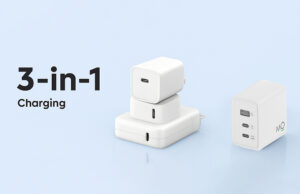
This is where the solution becomes clear, and practical. A single high-performance charger can replace a whole ecosystem of device-specific bricks, without slowing you down or limiting you.

Multi-Device Support (USB‑C PD Standard)

Modern devices increasingly support USB‑C Power Delivery (PD), a universal fast-charging standard designed to work across brands and categories.

Eliminates the need for device-specific chargers.

What it means for you?

  • Travel lighter: one charger for phone, tablet, laptop
  • Pack smarter: fewer cables, fewer bricks, less stress
  • Simplify your life: clean desk, clean bag, clean routine

What it means for the planet?

  • Less e-waste as fewer chargers get bought, replaced, and discarded
  • Fewer chargers manufactured and shipped—less material, less fuel, less packaging
  • Less redundancy overall: you stop buying the same functionality repeatedly


    Intelligent Power Sharing (IPS Patented Tech)

MokkoMotto includes IPS patented technology that dynamically distributes power based on what each connected device actually needs.Instead of wasting capacity or forcing compromises, power is allocated intelligently in real time.

What it means for you

  • Charge your phone + tablet + laptop at once
  • No juggling outlets, no “which one gets charged first?”
  • No compromise, just smooth, simultaneous charging

What it means for the planet

  • Zero wasted power behaviorally: energy is directed where it’s needed, when it’s needed
  • Every watt works harder: fewer inefficiencies, less unnecessary heat, less loss

This is what mindful tech looks like: elegance over excess.
You’re the consumer tech companies should fear, thoughtful, intentional, and uncompromising.

How Is It Sustainable?

Sustainability isn’t a label. It’s the sum of real engineering choices that reduce waste, extend lifespan, and cut energy loss.
GaN Technology Advantage

Most traditional chargers use silicon components. MokkoMotto uses GaN (Gallium Nitride), a newer, more efficient technology that enables high power in a smaller, cooler form.
Tangible efficiency difference:

  • GaN efficiency: ~95%
  • Typical silicon: ~80–85%

That efficiency shows up in real life:

  • More energy delivered to your devices
  • Less energy lost as heat
  • Faster charging behavior (often ~10% faster, or simply less time plugged in for the same battery gain)
  • It also reduces thermal stress.
  • Heat is the silent killer of electronics. A cooler, more efficient charger can mean:
  • less stress on charging circuits
  • smoother performance over time
  • better long-term reliability

Lower lifetime energy consumption

When a charger wastes less energy on every charge, those small savings compound—day after day, year after year.

What This Means for You

1) Longer-lasting devices = fewer replacements

If your devices experience less heat stress over time, they’re more likely to maintain performance and battery health longer—meaning you replace them less often.

2) Lower electricity bills over time (passive savings)

Let’s keep this simple and tangible. If a silicon charger runs at ~85% efficiency and GaN runs at ~95%, the silicon charger wastes more energy to deliver the same usable charge.

Example assumption:

One person delivers 167.5 Wh/day of usable energy into your devices (phone + laptop + accessories combined across a household).

Monthly energy (30 days)
167.5 Wh/day×30 days=5025 Wh/month
Convert Wh to kWh:
5025 Wh=5025/1000=5.025 kWh/month≈5 kWh/month
Using the rounded monthly value:
5 kWh/month×12=60 kWh/year
So, one individual uses ~60 kWh/year for laptops, phones and accessories.
Cost / savings at ₹5.5 per kWh

Annual cost=60 kWh/year×₹5.5/kWh=₹330/year
At ₹5.5 per kWh, 60 kWh/year costs ₹330 per person per year.
This is the annual spend of one person for charging their essential devices. 

Note: Rates per kWh, may vary for different financial year. Rate given above are of Karnataka, for financial year 2025-2026.
So as per the GaN efficiency, you will be saving nearly 10% of your annual spend. Which in this case is around Rs. 33, per person. Imagine the cost efficiency and power wastage reduced by 1M people.

It’s about passive savings you made after getting a multi-port GaN charger, while also reducing extra dumping.

3) Peace of mind

You’re not using a charger that quietly wastes energy in the background. You’re using one designed to be efficient every time you plug in.

What This Means for the Planet

Quantified impact 

Across the lifetime of a charger, efficiency gains add up. In households charging multiple devices daily, the total savings can reach hundreds of kilowatt-hours, and in heavy-use scenarios even more.

Scale that across millions of users, and you get:

  • less strain on power grids
  • lower emissions tied to electricity generation
  • less raw material extraction because devices and chargers last longer

Every time you plug in, you’re making the efficient choice.
Small actions, compounded across millions of users, reshape industries.

 Local Manufacturing, Global Standards

Sustainability isn’t only about what a product does, it’s also about how it’s made, how transparent it is, and how long it stays in use.

The Localised Manufacturing Advantage

When manufacturing is localised and accountable:

  • Quality control stays tight
  • Supply chains stay transparent
  • The product can be designed for repair and recycling from day one
  • It supports local economies and skilled jobs
What This Means for You
  • Higher reliability because QC is closer and tighter
  • Faster support when you need it
  • Products built to be repaired, not replaced
  • Confidence in knowing where and how your product was made
What This Means for the Planet
  • Reduced shipping emissions  which implies no endless intercontinental movement of components and finished goods.
  • A more circular mindset: repair-first dramatically cuts waste
  • Stronger local manufacturing ecosystems become sustainability multipliers

Which means, you’re not just buying a charger, you’re choosing for a better manufacturing model with your wallet.

Mindful Materials, Conscious Design

Sustainability also lives in the “small” decisions, materials, packaging, and the discipline to avoid bloat.
Design That Matters

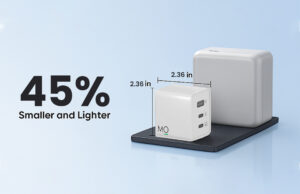
  • Compact design (smaller than majority of GaN chargers) with 3 ports—more capability, less bulk
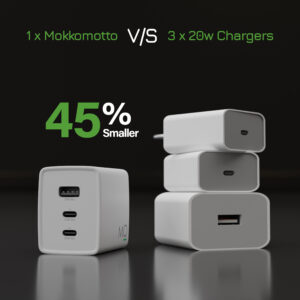
  • Minimal plastic use: (35 grams vs 35×3 grams), measurable reduction in plastic, as you’ll be using one multi port chargers, replacing others. 
  • Zero plastic packaging: a lightweight, reusable storage box (built to be kept, not thrown away)

What This Means for You

  • Easier to carry, easier to store
  • A charger that fits intentional living—clean, minimal, functional
  • Packaging that becomes a travel accessory, not trash
  • Less clutter in your home and bag—without losing performance

What This Means for the Planet

  • Less plastic pollution and less landfill contribution
  • Reduced material footprint without sacrificing capability
  • A product philosophy that asks, every time: “Do we need this?”

That question alone eliminates so much waste.

Your Choice Matters

This is what complete sustainability looks like when it’s done honestly:

  • Technology (GaN + IPS) that reduces waste and increases efficiency
  • Local making that improves accountability and cuts emissions
  • Mindful materials and packaging that reduce plastic and unnecessary mass

By choosing MokkoMotto, you’re joining a movement of conscious consumers who refuse false choices—people who won’t accept “either convenience or sustainability.”

By powering your devices, you power your ideals. Because your charger tells the world what you stand for.
 

Looking for a USB-C  charger for your MacBook that’s fully compatible, fast, and compact? I’m sure you would also like to know if the same power brick can charge your other Apple devices like the iphone, iPad and airpods.

What to Consider When Choosing the Right MacBook Charger

USB-C Charging Connector

Since December 28, 2024, the EU’s Common Charger Directive requires all new portable electronics to use USB-C ports. While MacBooks have used USB-C since 2016, newer models (2021+) feature both USB-C Power Delivery(PD protocol) and MagSafe 3 for maximum charging flexibility.

Current MacBook charging options:

  • USB-C/Thunderbolt ports: Universal fast charging across all Macbook models manufactured post-2016 
  • MagSafe 3: Available on MacBook Air (2022+) and MacBook Pro 14″/16″ (2021+)
  • Modern MacBooks (2021+) support USB Power Delivery (PD) 3.1 with Programmable Power Supply (PPS), enabling universal compatibility toUSB-C PD charger

Power Wattage Requirements

2024 MacBook Models:

  • MacBook Air 13″ & 15″: 35W (supports up to 70W for fast charging)
  • MacBook Pro 14″: 70W standard, 96W for optimal performance
  • MacBook Pro 16″: 140W for full-speed charging.
Note: All chargers compatible with USB-PD and PPS fast charging protocol start charging with a minimum output voltage of 20V for a Macbook, the wattage of the charger will decide the time taken for charging.

Introducing MokkoMotto MoCharge65, 65W Multi‑Device GaN Charger

MoCharge65 is a Made-in-India, travel-ready GaN charger crafted for modern professionals who demand fast, reliable power on the go. With a 65W total output, it delivers ample power to charge devices from laptops to phones at their optimal speeds, making it ideal for work, travel, and everyday life. 

Its multi-port design lets you power a laptop and accessories simultaneously, supporting both USB-C and USB-A devices with broad compatibility thanks to USB PD 3.0 and QC4 protocols.

Built on GaN technology, MoCharge65 achieves a smaller, more efficient form factor that runs cooler and drives higher performance than traditional silicon chargers, reducing heat through intelligent design so charging stays fast and safe. 

Smart power management, including dynamic distribution and protection circuits, continuously monitors and adjusts output to protect against overheating, overcurrent, and short circuits, giving peace of mind with every connection.

And because we stand behind its quality, MoCharge65 comes with a 2-year warranty, ensuring durability and confidence in daily use, with a free replacement for any undue issues. It’s not just powerful and compact; it’s engineered to be dependable in every situation you rely on it.

Note: For the fastest laptop charging, use a single USB‑C port and an E‑marked 100W USB‑C cable.

What makes people adopt MoCharge65 as a unified charger for all Apple devices?

  • Compatibility you can trust
  • Works with USB‑C PD MacBooks (Air and Pro). Supports PD3.0, PPS for safe negotiation of the correct voltage/current.
  • Fast, practical charging
  • Delivers up to 65W— compatible  for all MacBooks. Ideal for Macbook Air (M2/M3) and in everyday professional workflows (coding, office apps, calls, browsing).
  • Multi‑device convenience
  • Power your MacBook +iPhone + Airpods together. QC4 ensures rapid charging for compatible Android phones; PD3.0 ensures optimal charging for Apple devices.
  • Travel‑friendly design
  • Compact design on GaN technology coupled with patented  intelligent power sharing, eliminates multiple bulky factory chargers and streamlines to one portable solution.
  • Future‑ready for your stack
  • USB Type‑C standardisation means MoCharge65 plays nicely with your present and next devices, phones, tablets, cameras, and accessories.

Compatibility Guide: MoCharge65 with Recent MacBooks


Macbook Model (2023–2025) Inbox Power Adapter  Multi‑Port Use Notes Single‑Port Charging with MoCharge65
MacBook Air 13/15 (M2, 2022–23) 35W adapter If sharing power, laptop gets priority when solo‑C Yes (fast, practical)
MacBook Air 13/15 (M3, 2024–25) 35W adapter Share with phone/earbuds for light/medium loads Yes (fast, practical)
MacBook Pro 14‑inch (M3/M3 Pro) 70W adapter Under heavy sustained loads, battery may hold/slowly drop Yes (solid for typical workloads)
MacBook Pro 16‑inch (M3 Pro/Max) 140W adapter Not ideal for long heavy renders; great as travel backup Charges, not full‑speed fast‑charge

Where to Buy the Best GaN Charger for Your MacBook

  • Buy MoCharge65 on Amazon: MokkoMotto product page
  • Learn more on mokkomotto.com
  • Have a specific Mac model? Message us and we’ll confirm the optimal setup (ports, cables, and power‑sharing tips).

Shout‑Out: Popular Models That Aren’t Compatible for Charging via MoCharge65

  • MacBook Pro and MacBook Air models with MagSafe 1/2 only (generally 2012–2015 for Pro and up to 2017 for Air) do not accept USB‑C charging. These require their original MagSafe adapters.
  • 16‑inch MacBook Pro (2021–2024): It does charge via MagSafe 3, but fast‑charging at 140W requires USB‑C with a PD 3.1 EPR (≥140W) adapter. MoCharge65 (65W PD3.0) is ideal as a travel/backup charger and for light/medium tasks, not for sustained heavy workloads.

Concluding

For professionals, MoCharge65 stands out for universal compatibility built on open standards, USB PD3.0 and QC4, spanning Apple and Android ecosystems and fully supporting post2023 USB‑C MacBooks. Delivering a full 65W in a pocketable form factor, it provides fast charging without the bulk, ideal for hybrid work, commutes, and travel. Intelligent power negotiation ensures safe, efficient charging that keeps your Mac optimally powered while you stay productive. Make your carry lighter and your workflow faster, MoCharge65 is the multi‑device GaN charger your post‑2023 MacBook and the rest of your kit deserve.


Why Is Your Nothing Phone Charging Slowly or Randomly Stopping, and How Can a GaN Charger Help?

Nothing phones have carved out a unique niche among Android enthusiasts, combining minimalist design with solid performance. The Nothing Phone (1), Phone (2), and the budget-friendly Phone (2a) have gained significant traction for their transparent aesthetic and clean software experience. However, many users report frustrating charging issues that seem to plague these devices.

The Common Charging Complaints

If you browse Reddit threads about Nothing phones, you’ll find countless posts about charging problems. Users frequently complain about:

  1. Slow charging speeds that don’t match advertised specifications
  2. Inconsistent charging that stops randomly mid-charge
  3. Failure to trigger “Fast Charging” mode even with compatible adapters
  4. Overheating during charging that forces the phone to throttle

Each Nothing phone model (for reference visit their official page)has different charging requirements. The Phone (1) supports 33W charging, the Phone (2) can handle up to 45W, while the Phone (2a) maxes out at 45W as well. These specifications matter more than you might think.

Could the Issue Be Your Charger, Not Your Phone?

Before assuming your Nothing phone is defective, consider this: the problem might be your charging setup, not the device itself.

Is It a Fault in the Cable or the Adapter?

USB-C cables aren’t all created equal. Many users don’t realize that their cable might be the bottleneck. Here’s what affects charging performance:

  • Power Delivery (PD) compatibility – Not all USB-C cables support PD protocols
  • Current limits – Cheap cables often have lower amperage ratings
  • Wear and tear – Frequent bending and unplugging degrades internal connections

Reddit users frequently report that switching to a high-quality USB-C cable resolved their charging issues. Substandard or old cables create resistance that affects current flow, leading to slower charging speeds and random disconnections.

Could It Be Software or Battery Health?

Overheating has become a major issue with modern smartphones, and Nothing phones are not immune. When your phone gets too hot during charging, it automatically reduces charging speed or stops entirely as a safety measure. This is actually more common than people realize.

Additionally, battery health degradation affects charging behavior. After 12-18 months of use, lithium-ion batteries lose capacity and may require recalibration. Users on r/NothingTech frequently discuss how battery calibration issues cause erratic charging patterns.

Does the Power Source Matter?

Absolutely. Many charging problems stem from inconsistent power sources:

  • Voltage fluctuations from wall outlets affect charging stability
  • Extension cords can cause voltage drops
  • Low-quality power strips may not deliver consistent current

When your Nothing phone detects unstable voltage, it triggers safety cut-offs to protect the battery. This explains why your phone might charge fine in one location but struggle in another.


How Do Modern Charging Standards Affect the Nothing Phone?

What Is USB Power Delivery (PD) and Programmable Power Supply?

USB Power Delivery (PD) is the modern standard that allows devices to negotiate optimal charging parameters. Programmable Power Supply (PPS) is an extension of PD that provides even more precise voltage and current control.

Here’s the crucial part: Nothing phones, especially the Phone (1), Phone (2), and Phone (2a), rely heavily on PPS for optimal charging performance. Without PPS support, your phone falls back to slower charging modes.

Why Do Some Chargers Fail to Activate “Fast Charging”?

The “fast charging” handshake between your phone and charger is surprisingly complex. Mismatched voltage/current profiles can prevent this negotiation from succeeding.

For example, if you’re using an 18W charger or a non-PD GaN charger, your Nothing phone might only charge at 10-15W instead of its maximum capacity. Through the regular discussions by Nothing users, it is evident that they consistently report this issue when using older or incompatible chargers.

What Makes GaN Chargers Different from Traditional Ones?
What Exactly Is GaN Technology?

Gallium Nitride (GaN) technology represents a significant leap from traditional silicon-based chargers. GaN semiconductors can handle higher voltages and frequencies while generating less heat. This translates to:

  • Smaller physical size without sacrificing power output
  • Better efficiency (more than  95% vs 80-85% for silicon)
  • Lower heat generation during operation

How Does a 65W GaN Charger Improve the Charging Experience?

A quality 65W GaN charger provides several advantages for Nothing phone users:

  1. Adaptive power delivery with full PPS support ensures stable charging
  2. Reduced heat generation prevents thermal throttling
  3. Better conversion efficiency means more power reaches your device
  4. Improved battery longevity through consistent, clean power delivery

Can a MoGaNCharge 65 Fix Nothing Phone Charging Problems?

Does MoGaNCharge 65 Support PPS and Power Delivery?

The MoGaNCharge 65 features comprehensive PPS support with a voltage range of 3.3V–21V up to 3.25A. This profile is specifically designed for modern devices like Nothing phones, ensuring optimal compatibility with Phone (1), Phone (2), and Phone (2a) models.

The charger also supports laptops and tablets, making it a versatile solution for multiple devices.

How Is It Different from Regular 65W Chargers?
Compared to traditional silicon chargers, the MoGaNCharge 65 offers:

  • Superior power efficiency – More power delivered, fewer losses as heat
  • Advanced temperature control – No thermal throttling during extended use
  • Multiple port versatility – USB-C ports with comprehensive safety protocols
  • Compact design – Significantly smaller than equivalent silicon chargers

How to Know If You’re Using the Right Charger for Your Nothing Model

Refer to the table below, and try to figure out how different models of Nothing need different power requirements. In that case with an intelligent power supply, you can ensure that the device’s battery health won’t be compromised.

Model Fast Charging Wireless Charging 
Phone (1) Up to 45W Yes
Phone (2) Up to 45W Yes
Phone (2a) Up to 45W No (based on specs)
Phone (2a) Plus Up to 50W No (based on specs)
Phone (3) Up to 65W No (based on specs)

What Should You Check Before Plugging In?

Before purchasing any charger, verify these specifications:

  1. PPS voltage range – Look for USB-PD 3.0+PPS certification on the packaging
  2. Power output – Ensure it matches or exceeds your phone’s maximum charging speed
  3. Quality certifications – Check for standards like QC4+ or USB-IF certification


Rather than trusting blind items, you can always go ahead and check the specifications. It’s always better than trusting marketing gimmicks.

Can Using a GaN Charger Extend Battery Life?

Yes, consistent current delivery reduces battery strain over time. When your phone receives stable, clean power, the battery doesn’t have to work as hard to accept the charge. Community feedback on platforms like Reddit consistently shows that users who switch to quality GaN chargers experience:

  • More consistent charging speeds
  • Reduced overheating issues
  • Better long-term battery health

Battery & Charging 

Battery Si/C Li-ION 5, 150 MAH*

*5500MAH (In India Only)

Charging 65W Fast Charging

15W Wireless Charging

5W Reverse Wireless Charging

7.5 W Reverse Wired Charging 

Protocol PPS/ PD3.0/PD2.0/QC4.0/QC3.0/QC2.0/DCP/SDP/CDP/UFCS

Source: Nothing Phones 

Common Myths About GaN Chargers

GaN Chargers Overheat Easily

This is completely false. GaN technology actually runs cooler than silicon alternatives due to higher efficiency. Less energy is wasted as heat, resulting in lower operating temperatures.

They’re Unsafe for Phones

Modern GaN chargers include comprehensive safety features:

  • Over-Current Protection (OCP)
  • Over-Temperature Protection (OTP)
  • Over-Voltage Protection (OVP)

These safeguards make GaN chargers safer than many traditional alternatives.

Final Thoughts: Should You Switch to a GaN Charger for Your Nothing Phone?

If you’re experiencing charging issues with your Nothing phone, a quality GaN charger like the MoGaNCharge 65 could be the solution. The combination of PPS support, superior efficiency, and advanced safety features addresses most common charging problems.

The benefits extend beyond just faster charging – you’ll get better compatibility, improved device longevity, and a more reliable charging experience overall. It’s time to move away from outdated adapters and embrace modern charging technology.


What are your suggestions regarding our blog, don’t forget to mention it in the comments. Visit our Amazon and Flipkart stores to get best offers!

FAQ

Why is my Nothing Phone not showing fast charging? 

Your charger may lack PPS support or have incompatible voltage/current profiles. Check for USB-PD 3.0+PPS certification.

Can a 65W GaN charger damage my Nothing Phone? 

No, modern phones have built-in charging controllers that only draw the power they need. Safety protocols prevent damage.

How does MoGaNCharge 65 differ from regular chargers? 

It offers PPS support, higher efficiency, better temperature control, and comprehensive safety features in a compact design.

Is PPS support really necessary for fast charging? 

For Nothing phones, yes. PPS enables optimal charging speeds and prevents the common issues users report.

Does using a third-party charger void warranty? 

No, using certified third-party chargers doesn’t void warranty, but always choose reputable brands with proper certifications.


Apple’s latest iPhones (including the new iPhone 17) turn charging into a choice. In line with Apple’s environmental push, iPhones no longer include a power adapter in the box. Instead, the iPhone 17 and similar models use USB-C Power Delivery (PD) for wired charging and MagSafe/Qi2 for wireless. This lets you mix and match chargers: for example, Apple’s specs show the iPhone 17 can reach ~50% in ≈20 minutes using a 30–40W USB-C adapter, and its MagSafe (Qi2) mode can deliver up to 25W when paired with a 30W brick.

Choosing the right charger (or set of chargers) means unlocking maximum speed without harming battery health.

What Makes Modern iPhones Charge Better?

USB Power Delivery (PD): This is the wired fast‑charging standard built into USB‑C. USB‑PD 3.1 can negotiate up to 240W over USB-C, though smartphones draw much less. The key is flexibility: a PD charger and iPhone negotiate optimal voltage/current.

For iPhone 17, Apple notes any “USB-C power adapter that supports USB Power Delivery” will fast-charge the device. In practice, using a 20–65W PD adapter with a high-quality USB-C cable (or USB-C to Lightning for older iPhones) is essential for top speed. For example, a 30–40W USB-C PD charger will juice an iPhone 17 to ~50% in ~20 minutes. Modern GaN-based chargers pack high PD wattage into a small size, making them ideal “one brick” solutions for phones, tablets, and even laptops.

MagSafe: Apple’s proprietary magnetic wireless charging introduced with iPhone 12, now standardized with Qi2. The Apple MagSafe Charger snaps magnetically onto the back of an iPhone, ensuring perfect coil alignment and up to 15–25W of power. Paired with a 30W USB-C adapter, MagSafe provides up to 25W to iPhone 17 models. (Older models without Qi2 support top out at 15W via MagSafe.) 

Apple’s MagSafe Charger is Qi2-certified for 25W, meaning it meets the open standard for magnetic wireless charging. This ensures safe, efficient charging and cross-compatibility with any Qi2 accessories.

It uses built-in magnets to snap onto the back of an iPhone and delivers up to 25W of wireless power when paired with a 30W adapter. It’s certified for the Qi2 25W standard, ensuring safe, efficient charging.

Qi2 (Qi 2.2): The Wireless Power Consortium’s latest wireless standard (often called Qi2) brings high-power, magnetic wireless charging to many devices. Qi2 uses magnets and a smart handshake (Accessory ID) to achieve better alignment and communication. 

For iPhone 17, Apple’s technical specs explicitly list Qi2 wireless charging up to 25W. In practice, a Qi2-certified charger can negotiate the full 25W to the phone (brief bursts of full power followed by thermal regulation). Unlike Apple’s earlier proprietary MagSafe ecosystem, Qi2 is an open standard – so any certified Qi2 accessory (from Belkin, Anker, etc.) can fast-charge an iPhone just as MagSafe would.

The WPC notes Qi2.2.1 “delivers nearly 70% more power” than the original Qi2 and safely goes from 0–50% in ~30 minutes. In short, Qi2 makes high-speed magnetic charging reliable and cross-platform.


Quick Charger Reference

Scenario Recommended Solution Key Benefits
Fastest daily charging 30W+ USB-C PD GaN wall charger + USB-C cable Highest speed, efficient, cooler operation
Desk/nightstand convenience MagSafe/Qi2 wireless charging stand Perfect alignment, easy pick‑up and put‑down
Apple ecosystem (iPhone/Watch/AirPods) Certified 3-in-1 wireless charging station One cable for all devices, tidy setup
Travel and commuting Multi-port GaN charger + MagSafe battery pack Fewer bricks to pack, portable top‑ups
In-car navigation & charging Magnetic car mount + USB-C PD car adapter Stable alignment for navigation, hands‑free PD charging

Use this as a cheat-sheet: for each usage scenario pick the solution in the center column. Citations in the right column highlight their benefits.


Do You need Multi‑Device Charging Stations?
If you own multiple Apple devices, a 3‑in‑1 charging dock can transform your bedside or desk. These all‑in‑one stations usually combine:

  • A MagSafe-compatible pad for iPhone (15–25W),
  • An Apple Watch charging puck correctly aligned,
  • A Qi pad or small nook for AirPods.

With a single power brick, you can charge an iPhone, Watch, and AirPods simultaneously, fewer cables, less clutter. In practice, one well-designed dock (typically supplied with a 60–100W GaN adapter) will intelligently split its wattage so each device gets the right current. 

For example, A 65W GaN multi port charger can run multiple devices at once without slowing any down. A multi‑device stand eliminates the need for separate Apple cables and chargers. On the road, travel-friendly foldable 3‑in‑1 docks can even compactly serve all your gear in one unit.

Key features to look for: 

  • Make sure the dock has a MagSafe-certified pad for full-speed iPhone charging, a properly seated Watch charger and an AirPods wireless coil. 
  • Check that the included power adapter matches the dock’s total wattage (for example, a “90W dock” should come with a 90W brick). 
  • Look for UL/CE/FCC safety marks and Apple certifications (MFi for any Lightning components, Qi2 for wireless) to ensure reliable performance. 
  • Sturdy construction is important too – a solid base prevents tipping when you place your phone on it. Overall, a good 3‑in‑1 charger should charge all your Apple gear overnight (or faster) with minimal fuss

Safety and Battery Health: Charge Smart, Not Hard

High speed is great, but safety and longevity are paramount. Always choose chargers with the proper certifications:

  • Wired charger: USB-PD support and (if applicable) Apple MFi certification. Apple explicitly recommends either an Apple 20W (or higher) adapter or a comparable third‑party PD adapter.Reputable PD chargers carry UL or CE marks, meaning they meet rigorous safety standards
  • Wireless charger: MagSafe or Qi2 certification. A MagSafe or Qi2 label means the charger has passed the WPC’s tests. Qi2 certification in particular guarantees safe magnetic alignment and thermal management

General safety: Look for built-in protections. Good chargers will advertise over-current, over-voltage and short-circuit protection as standard. Many have thermal cutoffs too (shutting down if overheated). If a product page or manual lists these features, that’s a sign of solid design. A UL (Underwriters Laboratories) certification is a reliable seal of quality

Why Does it Matter?

  •  iPhone batteries are sensitive to heat and voltage. Apple’s own guidelines warn that charging in extreme temperatures can damage the battery. In fact, if your iPhone gets too hot, the system will pause charging until it cools down
  • To preserve battery health, avoid charging under a pillow, in a closed car on a hot day, or any place where heat builds up. 
  • Even your iPhone’s case can trap heat; if you notice your phone getting very warm on the charger, remove the case
  • Apple also builds charging “smarts” into iOS. For example, Optimized Battery Charging delays topping off past ~80% until you need it. This reduces the time the battery spends at 100%, slowing chemical aging. 

In short, use chargers that the phone recognizes (USB-PD or Qi2/MagSafe certified), keep the device cool, and let the phone’s software manage the final charging phase. These habits will keep your battery healthier for longer.

Choosing the Right Setup: Match Power to Your Day

Different users have different needs. Here are some common scenarios and how to equip yourself:

  • Ultra‑fast charging: If speed is your top goal (say you top up every morning before rushing out), go wired with a 30W–65W USB-C PD GaN wall charger and a quality USB-C cable. 
GaN chargers pack high power into a small brick. For instance, a 65W GaN charger can refill an iPhone from 0–50% in roughly the same time (≈20–30 min) as a 30W charger, with room to spare for a tablet or laptop too. This ensures you’re never waiting on power.
  • Tidy desk or nightstand: Use a MagSafe (Qi2) wireless stand. A stand holds your iPhone upright with magnets for seamless charging. You get fast wireless (15–25W) without fumbling with cables, and can quickly grab the phone when it rings. For example, an Anker MagGo 2-in-1 Stand holds iPhones by magnets and delivers Qi2 fast charging, making it ideal for nightstand use.
  • Multiple Apple devices: Choose a certified 3‑in‑1 station (as described above). These docks dedicate the right power to each gadget. Your MacBook or iPad charges via the same brick that’s powering the iPhone’s MagSafe pad, so you don’t need extra chargers. This is great for home or office, and even shared spaces like hotel lobbies or conference rooms.
  • Frequent travel: Pack a compact multiport GaN charger (at least two USB-C PD ports) plus a MagSafe battery pack. You’ll carry fewer bricks: one GaN charger can handle phone + laptop from a wall outlet, and the MagSafe power bank can top off the phone on the plane. Many GaN chargers now meet airline requirements for carry-on, thanks to their small size.
  • Daily driving: Install a magnetic wireless car mount on your dash and pair it with a USB-C PD car adapter. Modern car chargers (like Mophie’s 20W USB-C car charger) provide PD fast charge from your 12V outlet. A magnetic mount keeps the phone aligned for Qi2 charging and lets you navigate hands-free. This combo keeps you powered up and hands off your phone, maximizing safety and convenience.

Best Chargers for Your iPhone

Here are some top picks and examples (with certifications and style in mind):

  1. Apple MagSafe Charger: Apple’s official puck (requires a 30W USB-C adapter) gives MagSafe 25W wireless charging. It’s fully Qi2-certified, so it also works with any iPhone 12/13/14/15/16/17 model at peak speed.
  2. Mophie 20W USB-C Car Charger: Apple sells this as a PD fast-charger for vehicles. It plugs into any 12V outlet and provides USB-C PD power for an iPhone or iPad on the go.
  3. Portable Battery Pack (MagSafe/Qi2): Look for a portable MagSafe power bank (e.g. 10–20W wireless output plus 20–30W PD input). Many third-party models include safety chips and are MagSafe/Qi2 certified, so you get cordless charging off-grid.
  4. Mokkomotto MO Charge 65W GaN Charger: As an example from Mokkomotto’s lineup, the MO Charge 65 is a dual USB-C GaN adapter rated for 65W total. It’s ultracompact and can fast-charge an iPhone and laptop at the same time.

Even if you opt for third-party gear, stick with well-reviewed brands that list certifications (PD, MFi, Qi2, UL/CE). A cheap knock-off might offer high wattage on paper but lack proper safety testing. (Read more in our blog,Can A Cheap Charger Destroy Your Battery Health

The above examples are known for reliability and performance, making them smart choices for current iPhones.

Are You Ready For The Future‑Proofing Your Charging Setup?

Charging tech is still evolving. Qi2 itself is brand new (2024–2025), and WPC already hints at even faster wireless beyond 25W. USB-PD has jumped to 240W capability, so chargers that can output 100W+ are now common. 

When upgrading, look for GaN charger which can handle can handle two phones or a laptop + phone at once, without affecting battery’s health.

Also plan for universal compatibility, e.g. choosing USB-C (instead of proprietary plugs) means your next phone or tablet will still fit the ecosystem.

In general, favor quality over quantity. A few high-quality chargers will serve you longer than many cheap ones. Ensure new chargers are compatible with whatever new devices you might get (e.g. chargers that support both USB-PD and Qualcomm QuickCharge, or that have multiple ports). And always check for updated standards (e.g. Qi2.2.1 for 25W, soon Qi2.3+ for even more). By investing in safe, versatile chargers now, you’ll be ready for next-generation devices without overhauling your power setup.

Final Thoughts: Build a Setup You Don’t Have to Think About

For iPhone 17 and other modern iPhones, the sweet spot is blending speed, convenience, and safety. In practice, that means: use a high‑wattage USB‑C PD GaN charger (65W or more) and good cables for the fastest wired refills. Place a MagSafe/Qi2 wireless stand wherever you often put your phone (desk, nightstand) for easy pick‑up.

If you also charge an Apple Watch or AirPods, add a certified 3‑in‑1 dock so each device gets proper power without cord spaghetti. Carry a compact travel kit (multi‑port GaN charger + MagSafe battery) for power anywhere. And absolutely prioritize certified, safety-tested accessories (USB-PD, MFi, MagSafe/Qi2, UL/CE) so your iPhone and home stay protected. Follow these guidelines, and your iPhone will stay powered up – and its battery preserved – no matter where life takes you.

FAQs

  1. Is wireless charging bad for battery health?
    Wireless charging is safe for iPhones when using certified MagSafe or Qi2 gear. iOS manages heat and slows charging when needed to protect battery health.
  2. Do I need Apple‑branded chargers?
    No. Certified third-party USB-C PD chargers work just as well as Apple’s for fast charging. Just ensure they’re reputable and carry proper certifications like MFi, UL, or Qi2.
  3. What’s the fastest way to charge the latest iPhones?
    Use a high-watt USB-C PD charger (30–65W) and a quality PD-rated cable for fastest charging. iPhone 17 reaches ~50% in 20 minutes with a 30–40W adapter.
  4. Will my old Qi pad still work?
    Yes, but older Qi pads charge iPhones slowly (up to 7.5W) and need perfect placement. MagSafe or Qi2 chargers lock on magnetically for faster, more reliable 15–25W charging.
  5. How do I know if a charger is safe?
    Look for USB-PD or Qi support and safety logos like UL, CE, or FCC. Reputable brands meeting IEC 60950-1 / 62368-1 standards with built-in protections ensure safe, reliable charging.

GaN Chargers are rapidly becoming the go-to charging solution for modern users in India. With the growing adoption of multiple devices, USB-C standardization, and the unbundling of in-box chargers, the power accessory market is undergoing a major transformation—and GaN (Gallium Nitride) chargers are leading the charge, quite literally.

 Known for being smaller, faster, and cooler, GaN chargers are finally reaching the sub-₹3000 price range, making them accessible to more users than ever.

While the market is still largely dominated by big international names, several homegrown and emerging brands are quietly raising the bar, offering chargers that balance performance, build quality, and value. And yes, there’s one model we’re particularly proud of—but more on that shortly.

Why GaN Matters

Let’s start with the basics. Traditional silicon chargers are bulky and inefficient at higher wattages. GaN, in contrast, allows more power to flow through a smaller form factor without overheating. This makes GaN chargers:

  • No bulky heat sinks needed, as GaN generates less heat. Which enables a slimmer and more portable design.
  • Simultaneously, fast-charging of multiple devices, like laptops, phones, tablets, and even game consoles.
  • GaN (Gallium Nitride) chargers are significantly more energy efficient than traditional silicon-based chargers.
  • Traditional chargers often heat up and become unreliable at high loads. GaN chargers remain cool to the touch, extending both the charger’s and your device’s lifespan.

With most new devices—from iPhones to USB-C laptops—supporting high-speed charging protocols, investing in a GaN charger is no longer a luxury; it’s a smart upgrade. This efficiency and compactness are what make GaN Chargers Under ₹3000 price range, so appealing to everyday users

Exploring Budget-Friendly GaN Chargers: Who’s Doing It Right?

A growing number of accessory brands are stepping up with solid offerings of GaN chargers under ₹3000 range . While some lean on flashy specs, a few are genuinely delivering on performance and build.

Here’s a quick rundown of promising models in this range—and one that’s raising the bar for what users should expect at this price point.

1. MoCharge 65 by Mokkomotto

  • Wattage: 65W (USB-C PD + USB-A QC 3.0)
  • Price: ₹1999
  • Standouts: True 65W output, Intelligent Power Sharing, BIS-certified, compact design, universal compatibility

Designed with modern users in mind, MoCharge 65 combines form and function. The charger features multi-port support—a USB-C port for laptops and fast-charging phones, and a USB-A for legacy devices. It works on Intelligent Power Sharing (IPS) to distribute power efficiently, which means you get fast, safe charging without micromanaging cables.

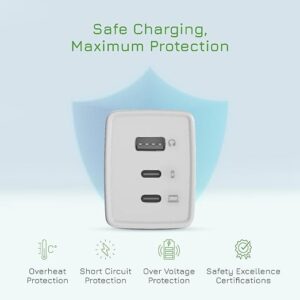
Mokkomotto GaN charger with overheat, short-circuit and over-voltage protection icons on light blue shield background

Safe charging with maximum protection: overheat, short-circuit and over-voltage safeguards.

Built using proven components sourced from global semiconductor companies, MoCharge 65 is fully BIS-compliant, with its R-number clearly marked and verifiable. Real-world reviews highlight consistent output even during extended charging sessions—something that sets it apart from many others in the same price bracket.

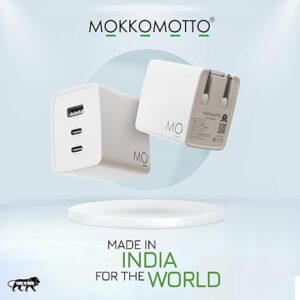
“Two Mokkomotto GaN chargers floating above a white pedestal with ‘Made in India for the World’ text

Mokkomotto GaN chargers: Made in India for the world.

Whether you’re traveling or desk-bound, MoCharge’s foldable plug and feather-light profile make it an easy addition to any tech bag. To  add on that a 12-month and an extended 12 months upon product registration.

A Make In India brand comes with after sales support which makes sure all your queries go answered and in sync with the Indian consumer needs.


2. Stuffcool Neo 45 GaN

  • Wattage: 45W
  • Price: ~₹2799
  • Features: Dual-port, USB PD + QC support, lightweight design

Stuffcool’s Neo line has earned a name for its dependable performance. Though the total output is slightly lower than others on this list, it’s a solid choice for phone and tablet users.

3. Portronics Adapto 65 GaN

  • Wattage: 65W (USB-C only)
  • Price: ~₹2499
  • Highlights: Single-port PD charger, minimalist design

Portronics has a strong retail presence and delivers consistent performance at competitive prices. However, the lack of a second port limits flexibility if you need to charge more than one device at once.

4. AMX XP 65 GaN

  • Wattage: 65W (USB-C + USB-A)
  • Price: ~₹2699
  • Strengths: Good output distribution, decent build quality

AMX has been popular among enthusiasts and students for providing real output specs and decent reliability. That said, customer support infrastructure is still evolving compared to more established brands.

Why True Wattage and Smart Power Delivery Matter

Many chargers boast 65W output—but only deliver that to one port, or under lab-like conditions. MoCharge 65 stands out here by consistently hitting high-wattage delivery even when two devices are connected, thanks to its smart IPS (Intelligent Power Sharing) logic.

This makes a big difference for people who charge phones and laptops together, or share chargers with others.

Portability and Build

All the chargers mentioned are compact—but MoCharge 65 leans into the travel-friendly narrative. With glossy finish, a compact footprint, and foldable pins, it’s designed to slip into a bag or even a pocket without fuss. It’s one of the few GaN chargers under ₹3000 that feels premium to the touch while still being rugged enough for everyday carry.

Universal Compatibility and Charging Protocols

Today’s devices use a mix of protocols—USB-PD, QC 3.0, PPS, and more. Look for chargers that can adapt intelligently.

MoCharge 65 ticks all the boxes here. Whether it’s a MacBook Air, an iPhone 14, a Samsung Galaxy, or a TWS case, it ensures fast and safe charging—automatically adjusting based on what’s plugged in.

BIS Certification and the R-Number

One thing users often overlook is BIS certification. In India, every safe electrical accessory should carry a BIS mark with an R-Number you can verify online.

Mokkomotto proudly displays the R-number for MoCharge 65 right on the packaging—no fine print, no ambiguity. It’s a clear sign of our commitment to quality and compliance.

What Customers Are Saying

User reviews and early feedback for MoCharge 65 point to three things:

  • It delivers actual 65W output, not “peak” marketing numbers
  • No noticeable heating during fast charging, even with laptops
  • Build feels solid, not flimsy or plasticky

On platforms like Amazon and direct purchases, users have praised both the performance and responsive customer service—a key differentiator in this segment.

Warranty and After-Sales Support

Warranty is where the gap widens between brands. While some smaller players offer minimal or no support, Mokkomotto provides:

  • 24-month hassle-free warranty
  • Dedicated support channels via chat and email
  • Responsive replacement policy in case of genuine issues

Because good tech is about more than just specs—it’s also about accountability after the sale.

Final Thoughts

The sub-₹3000 GaN charger market is finally heating up—and that’s great news for consumers. While several good options are available, MoCharge 65 by Mokkomotto blends power, portability, compliance, and customer care into one neat package.

For users looking for a reliable, no-compromise fast charger—whether for work, travel, or home use—MoCharge 65 isn’t just another option. It’s the one to beat.
MoCharge65 is now available at Amazon! 


When you’re in a rush and your device is hanging on to its last few percent of battery, waiting around for it to charge isn’t exactly ideal. That’s where newer charging tech steps in to make life easier. One of the most exciting developments in this space is the rise of GaN (Gallium Nitride) chargers paired with USB Power Delivery (PD). This powerful combo is changing the way we power up everything—from phones and tablets to high-performance laptops—offering faster speeds and broader compatibility than ever before.

But what exactly makes this combo a must-have for tech-savvy users? Let’s break it down.

What is GaN Technology?

GaN (Gallium Nitride) is a cutting-edge semiconductor material that’s revolutionising power electronics. Traditionally, chargers used silicon-based transistors, but transistors made from GaN are called High Electron Mobility Transistors (HEMT), which allows for faster and more efficient energy transfer with less heat generation. This means:

  • Higher power output with faster switching speed, leading to higher operating frequencies, resulting in smaller form factors.
  • GaN HEMTs have less loss, leading to higher energy efficiency.
  • A wide range of applications, like power supply for space stations, EV chargers, and powering AI data centers. 

Because GaN chargers generate less heat, they can pack more power into compact designs, making them ideal for today’s mobile lifestyles. 

For more information, please visit our website 

What is USB Power Delivery (PD)?

USB Power Delivery is a fast-charging standard developed by the USB Implementers Forum (USB-IF), designed to deliver significantly higher power over a USB connection. As per USB.org, the most recent specification (USB PD 3.1) supports up to 240W of power, enabling charging not only for phones and tablets but also for demanding devices like portable displays and printers.

Unlike traditional charging standards that follow fixed power “rules,” USB PD introduces intelligent power negotiation. The charger and device communicate to deliver the optimal voltage and current, ensuring faster, safer, and more efficient charging.

Key benefits of USB PD include:

  • Universal compatibility
  • Standardised Fast-charging across devices
  • Smart power delivery scaling
  • Standardization around USB-C connectors

USB PD is leading the way toward a truly universal fast-charging standard.

Why Combine GaN with PD?

By combining GaN technology with USB PD, users get the best of both worlds:

  • Compact chargers with powerful output
  • Faster charging with less heat generation
  • Support for a wide range of devices
  • Energy efficiency and reduced power loss

A single GaN PD charger can power up everything from your smartphone and tablet to a printer, portable monitor, or even a gaming laptop, eliminating the need for multiple bulky chargers.

What to Look for When Buying a GaN PD Charger

With so many GaN PD chargers on the market, it’s essential to know what sets the best apart. Here are key buying considerations:

1. Power Output Range

Check the wattage your devices need and match it with the charger’s max output:

  • Smartphones/Tablets: 18W to 30W
  • Portable Gaming Consoles: Around 45W
  • Printers/Monitors/Photocopiers: 65W to 140W
  • High-Performance Laptops: Up to 240W with PD 3.1

A charger that supports multiple power profiles ensures it will meet the needs of a variety of devices between 10W and 140W.

2. Support for USB PD 3.1, PPS, and Qualcomm QC4

Look for compatibility with USB PD 3.1, PPS, and QC4 to future-proof your purchase. This latest revision of PD3.1 expands power capabilities to up to 240W, making it versatile enough for even more demanding devices. 

  1. Port Configuration

Multi-device households should opt for dual or triple USB-C port chargers. Some GaN PD chargers offer smart distribution, adjusting power based on which ports are in use.

4. Safety & Certifications

Look for compliance with recognized national and international certifications such as:

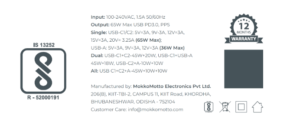
  • BIS Certification (Bureau of Indian Standards) – Mandatory for electronic products sold in India under the Compulsory Registration Scheme (CRS). Check for the R-xxxxx number mentioned below the BIS logo.

  • IS 13252 (Part 1):2010 –International Electrotechnical Commission standard for the safety of information technology equipment (ITE).
  • RoHS Compliance – Though not a mandate, this indicates restriction of hazardous substances.
  • USB-IF Certification – Ensures USB Power Delivery standards compliance for cross-device compatibility.
  • CE and UL (optional) – These international certifications indicate additional quality and safety benchmarks.

Note:  Always verify the BIS registration number on the packaging or product label before purchase.

5. Portability

One of GaN’s most significant advantages is its compact design. If you’re always on the go, look for foldable prongs, travel-ready size, and high wattage in a small form factor.

Real-World Use Cases

GaN PD chargers cater to a wide range of users:

  • Mobile Professionals: Charge phones and tablets simultaneously, anywhere.
  • Gamers: Power portable consoles or high-performance laptops without bulky bricks.
  • Creative Professionals: Keep portable monitors, photo printers, and label printers running seamlessly.
  • Remote Work Setups: Power webcams, docks, and accessories from a single charger.

The interoperability of USB PD ensures seamless usage across all major brands and device types, from Apple and Samsung to Dell, Lenovo, and beyond.

The Future of Charging: Efficiency and Interoperability

As devices grow more powerful, chargers must become more intelligent and versatile. That’s why the GaN + PD combination is the future of mobile power. With USB PD emerging as the universal fast-charging standard and GaN allowing high wattage in compact forms, this duo is set to dominate the next generation of chargers.

The shift away from fixed power rules, as outlined by USB.org, allows manufacturers to innovate while maintaining full cross-device compatibility—a win for both brands and consumers.

Final Thoughts

If you’re a tech-savvy buyer seeking the ultimate charging solution, look no further than a USB Type-C Multi-port GaN charger with USB PD, PPS, and QC functionality. It delivers speed, efficiency, portability, and most importantly, universality. One compact charger for all your devices, from a smartphone to a high-performance printer.

When shopping, prioritise:

  • PD 3.1 support
  • Multi-device output (10–140W)
  • Reliable certifications
  • Portable GaN design

In a world of growing device ecosystems, a GaN PD charger is more than an accessory—it’s a central part of your mobile power strategy.

The Mokkomotto MoCharge65 is now available on Amazon—take a look and see if it’s the right fit for your devices.

FAQ 

Q: What is a GaN charger?
A: A GaN (Gallium Nitride) charger is a next-gen fast charger that’s smaller and more efficient than traditional silicon chargers. It supports high power in a compact design.

Q: What makes USB PD chargers different?
A: USB Power Delivery (PD) is a universal fast-charging standard that supports smart power negotiation and delivers up to 240W to compatible devices.

Q: Which device brands are compatible with a GaN PD charger?

A: GaN PD chargers are widely compatible with major tech brands like Apple, Samsung, Google, Dell, HP, Lenovo, ASUS, and more. Thanks to USB Power Delivery (especially PD 3.1), these chargers can power a wide range of devices—smartphones, tablets, laptops, and even monitors—regardless of brand, as long as the device supports USB-C charging.


Select the fields to be shown. Others will be hidden. Drag and drop to rearrange the order.
  • Image
  • SKU
  • Rating
  • Price
  • Stock
  • Description
  • Weight
  • Dimensions
  • Additional information
  • Add to cart
Click outside to hide the comparison bar
Compare
Loading checkout...